
GHG quota in transport: bioenergy sector calls for targeted improvements in the parliamentary process
12 January 2026
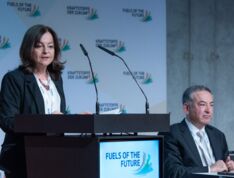
Ahead of the 23rd International Conference on Renewable Mobility, Marlene Mortler, Chairwoman of the Board of the German Bioenergy Association (Bundesverband Bioenergie e.V., BBE), presented the current challenges and concerns of the biofuel sector. The focus is on the draft bill recently adopted by the Federal Cabinet to further develop the greenhouse gas (GHG) reduction quota in transport, which is intended to transpose the Renewable Energy Directive RED III into national law.
Mortler stated: “With the draft bill on the further development of the GHG quota, the Federal Government has implemented important improvements compared to the original ministerial draft. At the same time, however, Germany clearly misses the RED III transposition deadline of 21 May 2025 – with tangible negative consequences for the biofuel sector and for quota-obligated companies. In its current form, the draft is not sufficient to reliably achieve the climate protection targets in the transport sector.”
According to the BBE, the renewable fuels market continues to be burdened by fraudulent sustainability certificates, driven by fraud involving allegedly advanced biodiesel imports and inadequate official controls. This undermines confidence in the GHG quota scheme and prevents investment in sustainable fuels. “We explicitly welcome the planned abolition of double counting for so-called advanced fuels from certain waste and residue streams. This is the most important measure to counter fraud incentives and to increase physical demand for biofuels,” Mortler emphasized.
What now matters, she said, is the rapid implementation of the proposed control instruments.
“In cases of suspicion, witness audits must be possible everywhere. On-site inspections by authorities are a key element of fraud prevention and must therefore become mandatory as soon as possible,” Mortler stated.
She further called for the increase in the GHG quota planned for 2028 to be brought forward to 2027: “Only in this way can the existing surplus certificates be reduced – surpluses that have arisen, among other things, due to abusive double counting and control failures.”
The BBE positively assesses that the reduction of the cap for crediting biofuels from food and feed crops originally envisaged by the Federal Ministry for the Environment was corrected during inter-ministerial negotiation. However, the sustainably available potential of crop-based biofuels remains far from fully utilized. “Climate protection is being squandered when domestic biofuels are exported instead of being used in the transport sector,” Mortler criticized. A gradual increase of the cap to the EU-law-permitted level of 5.8 percent is necessary. This would help compensate for the declining physical fuel demand resulting from the ramp-up of electromobility and ensure affordable clean individual mobility. The objective, according to the BBE Chair, must be to continue deploying at least the same volume of biofuels for climate protection purposes in the future.
“Whether in heavy-duty transport, agriculture, vehicle fleets or the existing stock of combustion-engine vehicles – biofuels such as biodiesel, bioethanol, HVO, bio-LNG or biomethane remain indispensable wherever electrification will continue to face limitations,” Mortler explained. According to the latest evaluation report by the Federal Office for Agriculture and Food (BLE), sustainable biofuels saved around 11.5 million tonnes of CO₂ in 2024 and increased average greenhouse gas savings compared to fossil fuels to 96 percent.
In addition, the BBE calls for a European-law-compliant approval of biogenic hydrogen.
“The selective exclusion of biogenic hydrogen in mineral oil refineries is not compliant with EU law,” Mortler made clear. “Article 25 of RED III does not provide for such a differentiation. In this respect, the current draft legislation violates EU law.” Biogenic hydrogen could represent an additional option that is available in the short term for the desired hydrogen ramp-up. “Biomethane reforming in refineries opens up an additional sales outlet for biomethane while at the same time creating another renewable hydrogen source,” Mortler said.
In view of the overall ambitious increase of the GHG quota, the BBE ultimately calls for an overarching fuel strategy. “Rising climate targets cannot be achieved through quotas alone – we need higher real blending levels of biofuels,” Mortler explained. “B10 for diesel as well as higher ethanol blends in gasoline are possible under today’s fuel standards.” This requires a swift and ambitious amendment of the 10th Federal Immission Control Ordinance (10th BImSchV), with E10 as the protection grade and the introduction of E20.
The BBE appeals to the Bundestag and Bundesrat to introduce targeted improvements during the parliamentary process. “Only if fraud is effectively prevented, EU-law leeway is fully used and blending levels are increased can RED III unlock its full climate protection potential in the transport sector,” Mortler concluded.
With regard to the EU, Mortler expressed the expectation that the use of the so-called Union Database (UDB) should only become mandatory for economic operators once its smooth and reliable functioning has been ensured by the European Commission.
These and many other relevant topics related to biofuels, biomethane and e-fuels will be discussed by the sector together with decision-makers from politics, research and industry. The full programme of the 23rd International Conference on Renewable Mobility “Fuels of the Future 2026”, taking place on 19–20 January 2026 at CityCube Berlin, as well as registration information, can be found at: www.fuels-of-the-future.com